Logo Color Palette: How to Choose Colors for Your Brand
How to choose a logo color palette that says the right thing about your brand — with color psychology, real-brand examples, and copy-paste hex codes.
A logo's color does more work than its shape. Before anyone reads your name, color has already told them whether your brand feels playful, serious, affordable or premium. Choosing the right logo color palette means matching that instant impression to what your brand actually is.
This guide covers color psychology for branding, real-world examples, and a practical way to land on your final palette. Once you have a direction, build the full scale on PaletteCSS and export it as CSS.
What each color says about a brand
- Blue — trust, stability, calm. The most-used logo color in the world (banks, tech, healthcare).
- Red — energy, urgency, appetite. Common in food and entertainment.
- Green — growth, nature, money. Used by finance, wellness and sustainability brands.
- Yellow — optimism, affordability, attention. Popular for value and youth brands.
- Purple — luxury, creativity, wisdom. A favorite for beauty and premium products.
- Black — sophistication, authority, minimalism. The default for luxury and fashion.
For a deeper dive into how these hues behave together, see color theory basics.
How many colors should a logo have?
Most successful logos use one or two colors, occasionally three. This is not a limitation — it is what makes a logo instantly recognizable and cheap to reproduce (print, embroidery, single-color stamps). A common structure:
- One primary brand color — carries most of the recognition.
- One neutral — black, white, or charcoal for text and contrast.
- Optional accent — used sparingly, often only in specific contexts (an icon, a badge).
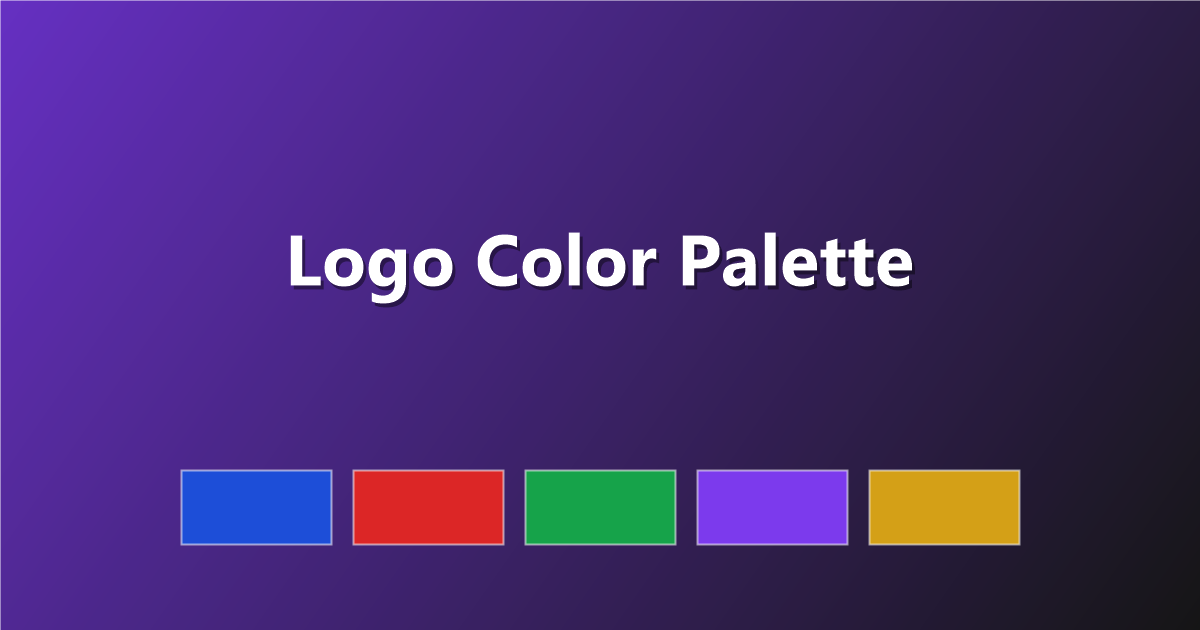
Example logo palettes (with hex codes)
1. Trusted Tech
Blue-led, clean and corporate.
#1D4ED8 · #1E293B · #FFFFFF
2. Bold & Energetic
Red-led, great for food or entertainment.
#DC2626 · #111827 · #FFFFFF
3. Natural & Sustainable
Green-led, earthy and grounded.
#16A34A · #3F3A2E · #F5F3EE
4. Premium & Creative
Purple-led, luxurious and imaginative.
#7C3AED · #1A1A1A · #F5F3FF
5. Minimal Luxury
Black and gold — timeless and expensive-feeling.
#0D0D0D · #D4A017 · #FAF7EF
Test your logo palette before finalizing
- Check it in grayscale. If your logo doesn't work in black and white, the design relies too heavily on color.
- Check it small. Favicon-size (16px) reveals whether the palette still reads at tiny sizes.
- Check it on light and dark backgrounds. Most brands eventually need a reversed (light-on-dark) version.
- Check competitors. If every competitor uses blue, a different hue can help you stand out immediately.
Frequently asked questions
How many colors should a logo have?
One or two is ideal, occasionally three. Fewer colors make a logo more recognizable and easier to reproduce across print, embroidery and digital formats.
What color logo is most trustworthy?
Blue is the most commonly used logo color for trust and reliability, which is why it dominates banking, tech and healthcare branding.
Should my logo color match my website colors?
Yes — your logo color should typically become your website's primary brand color, extended into a full UI palette with neutrals and semantic colors for consistency.
Keep exploring: browse color palettes, read the UI color palette guide to extend your brand color into a full system, or build your palette on PaletteCSS.